
Table of Contents
Why Selecting a Photochromic Pigment Provider is a Strategic Imperative?
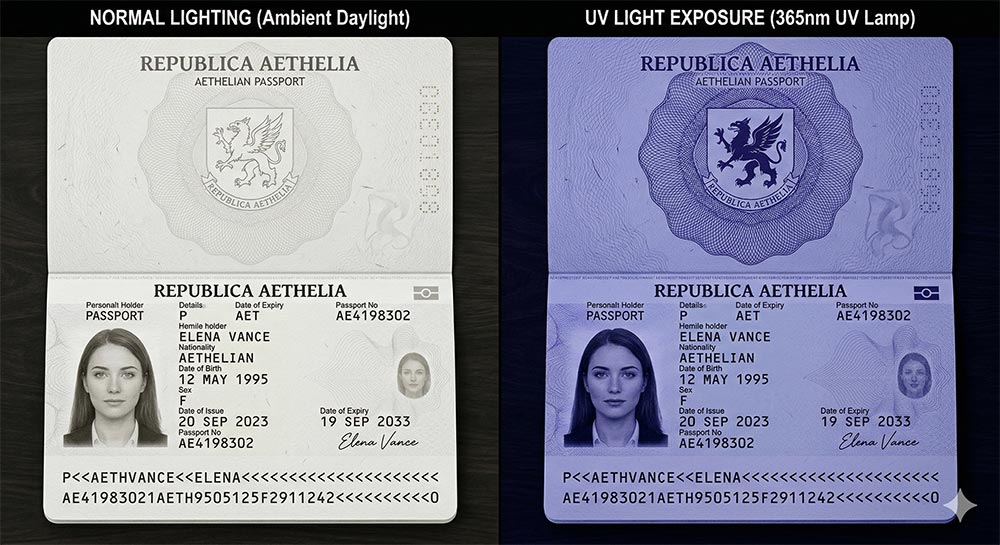
With the rapid expansion of the smart materials market, photochromic pigments have transcended their role as simple coloring agents, emerging as vital components that dictate the intrinsic functionality of a product. By reversibly altering their molecular structure to change color based on the intensity of visible light and ultraviolet (UV) rays, these advanced materials generate significant value across a broad spectrum of industrial applications, including interactive packaging and labeling.
Market statistics strongly support this trend. Valued at approximately $1.313 billion globally in 2024, the photochromic materials sector is projected to reach $2.247 billion by 2032, reflecting a compound annual growth rate (CAGR) of 6.95%. The Asia-Pacific region is driving this expansion, accounting for 30% to 45% of total revenue, while the South Korean market has gained attention as a pivotal testbed, with an anticipated annual growth rate of 4.5% to 7.0% between 2030 and 2033.
Nevertheless, compared to conventional pigments, photochromic alternatives entail a completely different level of technical demands, requiring stringent control over precise dispersion, lightfastness, solvent compatibility, and chemical stability. Consequently, identifying the right supplier for these materials extends far beyond routine procurement; it is a critical strategic decision that can determine the success or failure of next-generation smart product development.
1. Three Major Technical and Supply Chain Risks When Integrating Photochromic Pigments
Chemical Vulnerabilities of Organic Photochromic Molecules
Commercially utilized organic light-sensitive molecules—such as diarylethenes, chromenes, spirooxazines, and spiropyrans—exist in a dynamic state, constantly absorbing specific wavelengths of energy to rearrange their molecular structures. This inherent characteristic leads to several critical weaknesses:
- Photochemical Fatigue: A permanent loss of functionality can occur upon direct contact with airborne moisture or oxygen, acid-base substances, plastic resins, or ink solvents.
- Fading Rate Control Issues: Instances where color restoration fails can arise due to steric hindrance from the surrounding polymer matrix.
- Solvent Incompatibility: Immediate functional degradation occurs when exposed to highly polar or corrosive solvents, including dichloromethane, ammonia, MEK, ethanol, or acetone.
Physical Constraints During Printing and Molding Processes
- Particle Size Regulation: To prevent nozzle clogging in non-aqueous printing applications like gravure, flexo, and offset, strict control of particle size below 7µm is imperative.
- Thermal Resistance: The materials must feature a highly heat-resistant design capable of enduring thermal shocks of 180–240°C during plastic injection and extrusion molding without capsule rupture.
- Shear Stress Tolerance: Ensuring resistance against mechanical impacts generated during paint mixing operations is essential.
Global Supply Chain Volatility and Procurement Risks
Complex factors, ranging from the imposition of anti-dumping duties to geopolitical conflicts, are causing severe cost fluctuations within the global pigment supply network. Relying solely on the lowest price from unverified vendors often triggers direct financial losses stemming from production line shutdowns, delivery delays, and material shortages.
2. The Core Solution: The Chemical Engineering Mechanism Behind Microencapsulation
Microencapsulation technology serves as the only viable industrial solution for overcoming the physicochemical vulnerabilities associated with photochromic pigments. This process, which creates microcapsules measuring just a few micrometers by sealing the light-sensitive dyes within a liquid solvent core encased by a specially engineered transparent synthetic resin shell, performs two simultaneous functions:
| Function | Description |
|---|---|
| Internal Environment Optimization | Sustains a liquid environment allowing light-sensitive molecules to alter their structure freely. |
| External Protective Barrier | Shields molecules from corrosive chemicals, UV degradation factors, and ink binders. |
3. Six Vital Evaluation Criteria for Selecting a Premium Photochromic Pigment Supplier
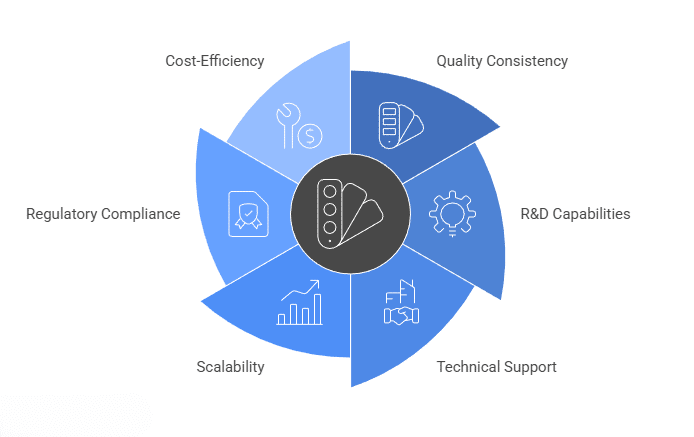
We have outlined the mandatory checkpoints that R&D departments and B2B procurement managers must assess when auditing prospective vendors.
Criterion 1: Batch-to-Batch Quality Consistency and International QA/QC Standards
Variations in Lab* color space values, reaction sensitivity, and activation temperature between production runs represent the most critical defects in light-sensitive pigments. A top-tier supplier should be capable of providing Certificates of Analysis (COA) while maintaining a strict control system for process parameters (pressure, time, temperature, and ratio) based on ISO 9001 standards.
Criterion 2: Customized R&D Capabilities Backed by an Original Manufacturer
It is crucial to partner with an original manufacturer that holds direct authority over its formulations and production lines, rather than relying on a simple distribution agent. Because functional pigments require different curing temperatures, viscosities, and pH levels depending on the application substrate (ink or resin), the capability to design tailored formulations—finely adjusting reaction speeds, color intensity, and microcapsule wall thickness—is indispensable.
Criterion 3: Prompt and Proactive Technical Support
Processing issues such as capsule rupture or pigment agglomeration during compounding can happen unexpectedly. The benchmarks for assessing a superior supplier’s technical support capabilities include:
- The presence of a dedicated technical service team.
- The ability to respond to client inquiries within a 24-hour window.
- Proven customer retention metrics demonstrated by high reorder rates (exceeding 30%).
Criterion 4: Mass Production Scalability and Supply Chain Resilience
- The capacity to preserve uniform quality when transitioning from lab-scale formulation to ton-level mass production.
- Achieving an On-Time In-Full (OTIF) delivery rate of at least 95% to 97%.
Criterion 5: Compliance with Global Hazardous Substance Regulations and ESG Management
Given the nature of end products like smart packaging, baby goods, apparel, and cosmetics, passing global regulatory standards is a prerequisite for commercialization. The following documentation must be requested from the supplier:
| Required Documents |
|---|
| Material Safety Data Sheets (MSDS) |
| Environmental Management Certification (ISO 14001) |
| Certificate of Analysis (COA) |
Criterion 6: Practical Cost Efficiency Analysis Based on Total Cost of Ownership (TCO)
Merely comparing the price per kilogram often leads to misguided decisions. Lower-quality industrial pigments demand higher input volumes due to poor tinting strength, resulting in accumulating downtime expenses caused by frequent processing defects. A realistic evaluation requires a TCO-based approach that comprehensively factors in reductions in defect rates, cycle lifespan, and coloring power.
4. In-Depth Analysis of a Global Photochromic Pigment Supplier: Insilico
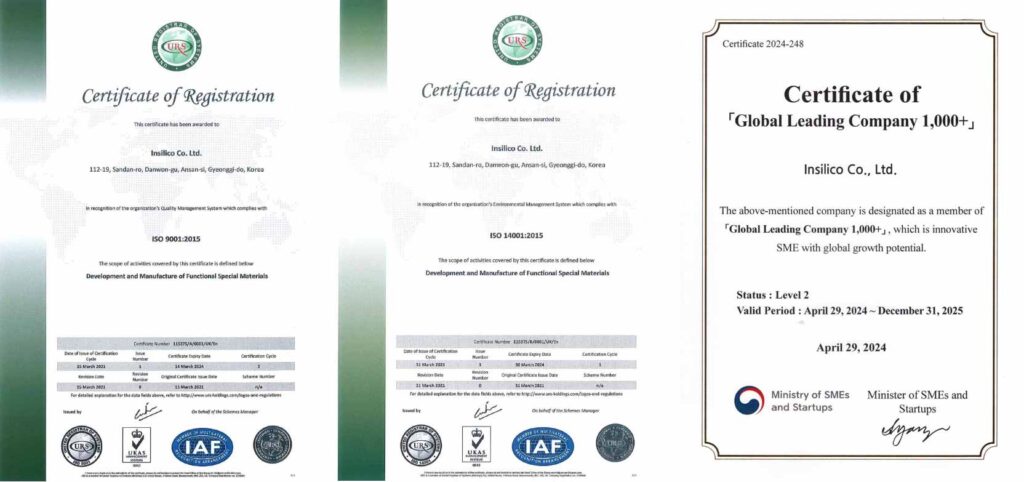
Founded in 2002, Insilico stands out as a premier enterprise that comprehensively fulfills the aforementioned six criteria. Moving beyond basic chemical manufacturing, it is an original technology manufacturer delivering IT-integrated functional material solutions to global markets, including East Asia.
Core Product Line: The Chameleon UV Ink Series
Insilico’s flagship offering, ‘Chameleon UV Ink’, relies on a microcapsule architecture perfectly tailored for non-aqueous printing operations.
- UVI-G: Designed for gravure printing
- UVI-F: Designed for flexographic printing
- UVI-S: Designed for silkscreen printing
- Substrate Compatibility: Features broad compatibility across materials such as Paper, Nylon, PE, OPP, and PET
Innovative Technology: Bichrom P Bicolor Transition
Surpassing standard colorless-to-colored shifts, this technology achieves full bicolor transitions—such as shifting from Light Blue to Violet or Pink to Blue—when exposed to specific light sources. This innovation delivers a distinct competitive edge in high-end design applications and anti-counterfeiting security markings. By earning ISO 14001 and ISO 9001 certifications, being designated as a global top 1,000+ small giant enterprise, and winning the $3 Million Export Tower award, the company has successfully met the rigorous quality standards of its international clientele.
Conclusion
(Video 1: A summary of the selection criteria for photochromic pigment suppliers)
In cutting-edge industrial applications like high-end textiles and anti-counterfeiting security solutions, photochromic pigments are the central materials that define a brand’s competitiveness and the functionality of the finished product. To secure an ongoing technological advantage in a market expanding at a CAGR of 6.95%, establishing a strategic alliance with a verified supplier specializing in photochromic optical materials is absolutely essential.
✅ Microcapsule technology with precise particle size control below 7µm
✅ International standard certification frameworks and unwavering quality consistency
✅ Rapid technical support and customized formulation engineering
Moving away from lowest-price procurement and choosing a genuine value partner equipped with robust quality control capabilities and proprietary technologies represents the most powerful investment you can make to shorten your product development lead time and forge sustainable competitiveness in the global smart materials arena.
Frequently Asked Questions (Q&A)
Q: What is the current size and growth outlook for the global photochromic pigment market?
A: Driven by the escalating demand for smart materials, the market, valued at roughly $1.313 billion in 2024, is projected to climb to $2.247 billion by 2032, registering a CAGR of 6.95%. The Asia-Pacific region is spearheading this growth, commanding between 30% and 45% of total sales.
Q: In which industries are photochromic pigments predominantly applied?
A: While experiencing the most rapid acceleration in the plastics sector (including toys, consumer electronics, and eyewear), they are also heavily utilized across diverse functional materials and industrial coatings, such as interactive packaging, anti-counterfeiting security markers, and UV-responsive smart textiles.
Q: Why is microencapsulation technology considered mandatory for photochromic pigments?
A: It provides an optimal internal liquid environment (the core) that allows the light-sensitive molecules to freely shift their structures, while simultaneously forming a synthetic resin outer wall (the shell) to protect these molecules from corrosive ink binders and external UV degradation agents. Without this dual-layer architecture, achieving industrial-grade durability is impossible.
Q: Why should we opt for an original manufacturer rather than a simple distributor?
A: Manufacturers directly oversee quality control and production lines, enabling them to ensure delivery stability and achieve bulk cost reductions. Furthermore, their profound technical expertise allows for immediate support, including on-site troubleshooting and substrate-specific formulation adjustments, while structurally minimizing supply chain risks.
Q: Why is Total Cost of Ownership (TCO) analysis more important than just unit price?
A: Even if the initial unit price is cheap, poor tinting strength necessitates higher input quantities, while indirect costs arising from supply delays and process defects drastically inflate total production expenses. A holistic TCO-based evaluation—incorporating delivery stability, durability, and yield—serves as the sole benchmark for determining genuine cost efficiency.
Initiate a Technical Consultation with Insilico Today.
The triumphant commercialization of functional pigments hinges entirely on partnering with a firm that possesses both proven proprietary microencapsulation technology and advanced manufacturing innovation capabilities.