Blog
New Ways to New Materials by Insilico

Photochromic Pigment for Textiles: How to Use in Fabric Printing

Photochromic Pigment for Textiles: How to Use in Fabric Printing

The Definitive Guide to Photochromic Pigments for Textiles: Mastering Formulation and Process

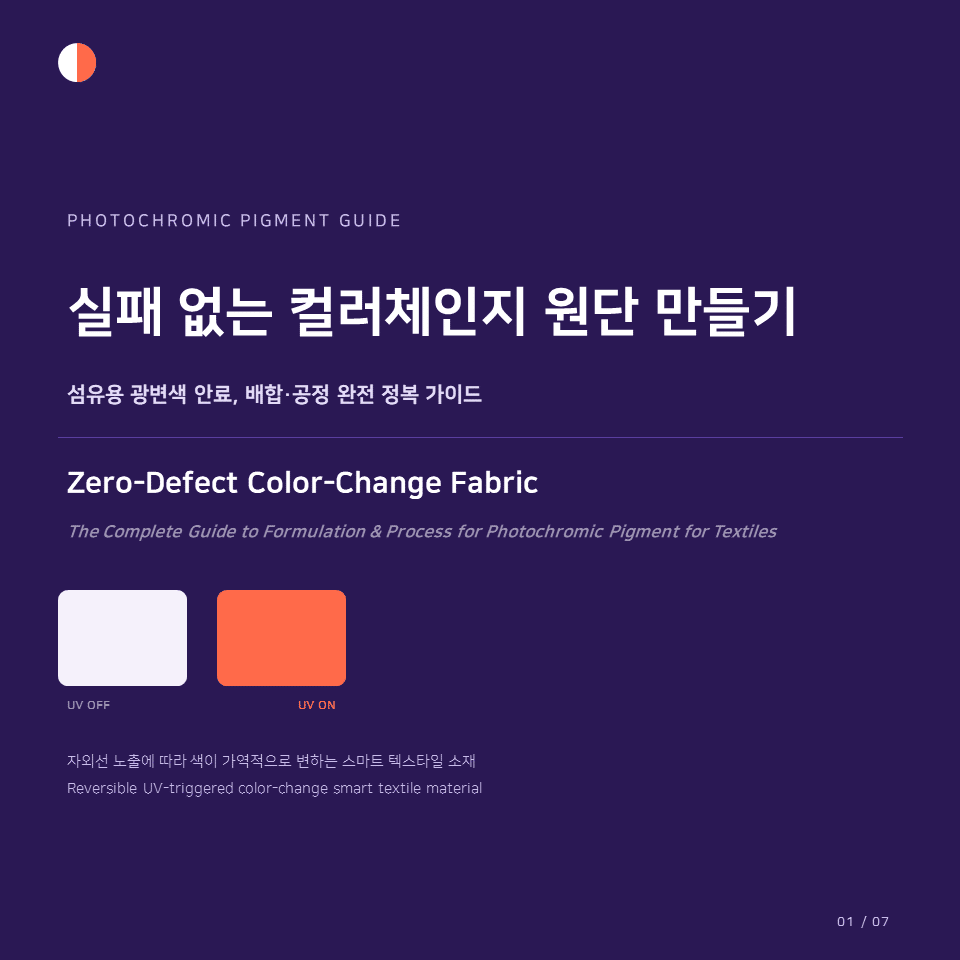
(Image 1: A side-by-side comparison of a photochromic T-shirt revealing vibrant patterns under UV exposure)

The modern textile landscape is shifting from static protection to dynamic interaction. Today’s high-value “smart apparel” market demands fabrics that respond actively to environmental stimuli. At the heart of this evolution is the use of photochromic pigment for textile—a specialized material that undergoes a reversible color change when triggered by ultraviolet (UV) light.

Beyond mere aesthetic novelty, these pigments are finding critical applications in wearable UV sensors, military camouflage, anti-counterfeit printing, and interactive children’s wear. However, integrating these compounds into textile production is complex. Since photochromic dyes lack an inherent affinity for fibers, success depends on mastering multi-phase polymer systems and precise thermal profiles. This guide provides B2B professionals with a technical deep dive into molecular mechanisms, data-driven formulation, and durability strategies.


1. The Science of Light-Reactive Fabrics: Understanding Photochromic Pigment for Textile

Reversible Structural Transformation

The “magic” of photochromism is actually a sophisticated chemical rearrangement. When exposed to UV energy, the molecules transition to an “open-ring” structure, which absorbs and reflects specific visible wavelengths to create color. Once the UV source is removed, the molecules return to their thermodynamically stable, colorless “closed-ring” state.

Material Standards: Spiropyrans vs. Spirooxazines

For commercial textile ink systems, choosing the right organic compound is vital. The following table highlights why Spirooxazines have become the industry benchmark for anyone utilizing photochromic pigment for textile in a mass-production environment.

PropertySpiropyransSpirooxazines
Coloration SpeedRapid at 365nmConsistent
Decoloration SpeedSlowFast
Thermal StabilityPoor (performance drops at heat)High
Oxidation ResistanceLowHigh (due to Nitrogen atoms)
B2B ApplicationLimited/SpecializedIndustry Standard
Microencapsulation: The Functional Barrier

Pure photochromic dyes cannot change color in a solid crystalline state and are highly sensitive to chemicals. To function on fabric, they must be housed in 2–5 µm polymer shells. This microencapsulation provides the dye with the liquid environment needed for molecular movement while protecting the photochromic pigment for textile from the rigors of chemical exposure during processing.


2. Engineering the Perfect Blend: Data-Driven Formulations

(Image 2: A researcher precisely measuring chemical compounds in a laboratory setting)
Selecting the Right Binder System

Since the pigment does not bond to fabric on its own, the binder acts as the essential “glue.” Your choice depends on the desired end-use and the specific type of photochromic pigment for textile being used:

  • Acrylic Binders: Exceptional rub fastness, though they can stiffen fabric. Use soft-grade acrylics mixed with silicone softeners.
  • Water-based Polyurethane (PU): The go-to for stretchable fabrics to prevent cracking.
  • Liquid Silicone Rubber (LSR): Ideal for high-gloss, premium finishes.
Standardized Mixing Ratios

Incorrect ratios lead to cracking or pigment migration. Follow these verified B2B guidelines for optimal performance:

System TypeRecommended RatioCritical Note
Powder + Clear Binder5-10% Pigment / 90-95% BinderExceeding 10% causes migration
Liquid Slurry (Two-Part)50:50 RatioOptimized for viscosity & color
Specialty Inks5-25% by weightAdjustable based on application

Pro Tip: In a Pad-cure process using 50g/L of pigment to 200g/L of binder, fabrics can maintain UPF 50+ ratings and keep color loss under 11% even after 20 wash cycles.


3. Process Control: Screen Printing and Curing Insights
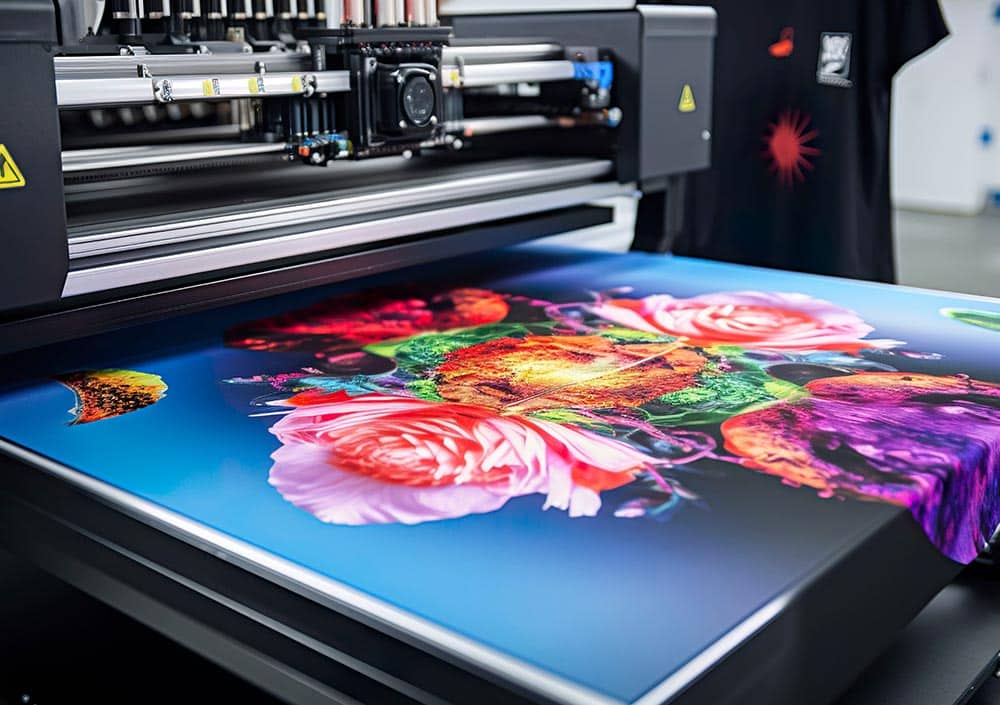
(Image 3: A digital screen printing machine applying intricate floral designs to fabric)
Dispersion Control: Avoiding Capsule Rupture

The microcapsules are fragile. When preparing your photochromic pigment for textile mixture, a careful dispersion process is required.

  • The “Never” Rule: Never use high-speed bead mills. These will shatter the 2–5 µm capsules, rendering the pigment useless.
  • The “Must” Rule: Use low-speed sweep mixing or manual spatula stirring to maintain capsule integrity.
Technical Printing Specifications
  • Mesh Count: Use 80–150 mesh polyester screens.
  • Sizing Rule: Ensure the mesh opening is at least 1.5 to 2 times the size of the pigment capsule.
  • Risk: Failing this leads to immediate screen clogging and uneven prints.
Curing Profiles and Thermal Limits

Precision in the oven is non-negotiable for maintaining the life of photochromic pigment for textile.

  • Optimal Conditions: 140°C–160°C (284°F–320°F) for 2.5–3 minutes.
  • Critical Threshold: Exceeding 165°C (330°F) will collapse the organic dye structure, drastically shortening the functional lifespan.
Enhancing Longevity with HALS

Standard UV absorbers (UVA) act as a shield that prevents the pigment from reacting. Instead, use HALS (Hindered Amine Light Stabilizers). HALS neutralizes free radicals caused by polymer degradation without blocking the UV light necessary for the color-change reaction.


Conclusion

(Video 1:  Key Summary of Optimal Formulation and Printing Processes for Photochromic Pigments)

Successfully implementing photochromic pigment for textile technology requires a synergy of molecular chemistry and precision engineering. To ensure a claim-free production line, manufacturers must prioritize four pillars: selecting Spirooxazine for stability, employing low-shear mixing, adhering to the 5–10% pigment ratio, and utilizing HALS (Hindered Amine Light Stabilizers) for light stabilization.

Furthermore, as the industry moves toward sustainability, adopting BPA-free and formaldehyde-free binders is essential for Oeko-Tex compliance. Looking ahead, the next breakthrough lies in Sol-Gel nano-coating, which promises to bring photochromic functionality to high-resolution inkjet printing.


Frequently Asked Questions (Q&A)

Q: Which material is better for mass production, Spiropyran or Spirooxazine?

A: Spirooxazine is the commercial standard due to its superior oxidation resistance and faster decoloration speeds.

Q: Why is microencapsulation necessary for photochromic pigment for textile?

A: It protects the dye from chemicals and provides the “molecular space” required for the dye to change shape and color.

Q: Can I use a high-speed mixer for the ink?

A: No. High-shear force will physically destroy the polymer shells, causing the dye to leak and lose its function permanently.

Q: What happens if the curing temperature exceeds 165°C?

A: The organic dye molecules will degrade, significantly reducing the number of times the fabric can change color.

Q: What are the washing instructions for these garments?

A: Wash in cold water (below 30°C) on a gentle cycle, inside out, and avoid bleach or softeners. Always line dry in the shade.


Launch Your Smart Textile Project Today.

Achieving success with photochromic pigment for textile applications requires perfect alignment of formulation, dispersion, and thermal control. Don’t risk fabric loss or quality claims.

Consult with the Insilico technical team today for expert guidance on photochromic microcapsules.


References

Privacy Policy

INSILICO Co. Ltd. (hereinafter referred to as the “Company”) complies with the Personal Information Protection Act and related laws and regulations to protect the freedom and rights of information subjects, legally process personal information, and securely manage it. In accordance with Article 30 of the Personal Information Protection Act, the Company establishes and discloses this Privacy Policy to guide information subjects on the procedures and standards for the processing of personal information and to promptly and smoothly address related complaints.

Article 1: General Provisions
“Personal information” refers to information about an individual who is alive and can be identified by information such as their name, resident registration number, etc. (including information that, even if it cannot identify a specific individual with the information alone, can easily identify a specific individual when combined with other information). An “information subject” refers to a person who can be identified by the information being processed, and it refers to the person who is the subject of the information. The Company makes its Privacy Policy easily accessible at all times by disclosing it on the first page of its website. Additionally, when the Privacy Policy is revised, it will be announced through the website (or individual notice). Each business department may operate its own separate Privacy Policy according to the nature of its operations. In such cases, the Privacy Policy of each business department will take precedence, and you should check the Privacy Policy posted on the respective website.

Article 2: Personal Information Processing Items and Purposes
The Company processes personal information within the minimum scope necessary for providing services, and the processed personal information will not be used for purposes other than the following:

① Processing Items
a) Information collected when registering inquiries: Name, company name, email, phone number, department
b) Information collected when registering internal/external audit reports: Email
c) Automatically generated and collected items during website usage: Connection IP information, service usage records, access logs, cookies, MAC address

② Processing Purposes
a) User identification, response to user inquiries, proposals, complaints, (A/S) after-sales service processing, etc.
b) Understanding the frequency of access, collecting statistics on service usage for stable service operation and quality improvement during user service usage analysis

Article 3: Processing and Retention Period of Personal Information
The company promptly disposes of personal information after achieving the purpose of collection and use. However, for the following information, it will be retained for the specified period for the reasons stated below, and the consent of the information subject will be obtained if necessary:

① Collection Items When Registering Inquiries
– Retention Period: 5 years
– Reason for Retention: User identification, response to User inquiries, handling of complaints, notification of announcements

② Collection Items When Registering Internal/External Audit Reports
– Retention Period: 3 years
– Reason for Retention: User identification, reporting of irregularities, handling of complaints

③ Automatically Generated and Collected Items During Website Usage
– Retention Period: 3 years
– Reason for Retention: Understanding access frequency and collecting statistics on service usage

Article 4: Destruction of Personal Information
The company promptly destroys personal information when it becomes unnecessary due to the expiration of the retention period or the achievement of the processing purpose. If personal information needs to be retained despite the expiration of the consent period obtained from the data subject or the achievement of the processing purpose due to other laws, it will be separately stored in a different database (DB) or at a different location. The method of destroying personal information is as follows:

① Personal information recorded and stored in electronic file format will be deleted using technical methods that cannot reproduce the records.
② Personal information recorded and stored on paper documents will be shredded or incinerated for destruction.

Article 5: Provision of Personal Information to Third Parties
The company uses personal information within the scope of the purpose of collection and does not use or provide/share personal information for purposes beyond that scope. However, there are exceptions as follows:

① When obtaining separate consent from the information subject
② When there are special provisions in other laws
③ When it is necessary to protect the urgent interests of the life, body, property of the information subject or a third party, who is unable to express their intention due to incapacity or unknown address.
④ When it is necessary for statistical compilation and academic research purposes and personal information is provided in a form that cannot identify specific individuals
⑤ When it is necessary to provide personal information to perform tasks prescribed by other laws, even if it is not used for purposes beyond the intended purpose, and it has been approved by the protection committee
⑥ When it is necessary to provide personal information to foreign governments or international organizations to fulfill treaties and other international agreements
⑦ When it is necessary for the investigation of crimes and the indictment and maintenance of public prosecution, or for judicial activities
⑧ When it is necessary to perform judicial work by the court
⑨ When it is necessary for the execution of punishment, protective disposition, or protective supervision

Article 6: Outsourcing of Personal Information Processing
The company does not outsource customer’s personal information to external companies. If outsourcing tasks arise in the future, we will promptly disclose it through this Privacy Policy.

Article 7: Rights and Obligations of Information Subjects and Methods of Exercising Rights
Information subjects may exercise the following rights related to personal information protection at any time with the company:

① Request for access to personal information
② Request for correction if there are errors
③ Request for deletion
④ Request for processing suspension

The exercise of rights related to personal information protection can be made in writing, by electronic mail, FAX, etc. to the company, and the company will promptly take action on it.
If the information subject requests correction or deletion of personal information, the company will not use or provide the personal information until correction or deletion is completed.

Rights may be exercised through a legal representative or an authorized agent of the information subject. In this case, an authorization letter must be submitted.

Article 8: Security Measures for Personal Information
The company takes the following measures to ensure the security of personal information:

① Administrative measures: Establishment and implementation of internal management plans, regular employee education, etc.
② Technical measures: Installation of external access control systems, prevention of computer virus damage using antivirus programs, network personal information transmission security measures using encryption algorithms (SSL), etc.
③ Physical measures: Access control of computer rooms, data storage rooms, etc.

Article 9: Installation, Operation, and Refusal of Automatic Collection Devices for Personal Information
The company operates ‘cookies’ and other similar technologies to store and retrieve information about you regularly. Cookies are very small text files sent by the company’s web server to your browser and stored on your computer’s hard drive.

The company uses cookies for the following purposes:
① Analyzing the frequency of access, visit time, and tracking user preferences and interests.
② Targeted marketing and personalized service provision based on event participation and visit frequency, among other things.

Users have the option to set your cookie preferences. Therefore, Users can choose to allow all cookies, confirm each time cookies are stored, or refuse to store all cookies by setting options in Users’ web browser.

Users can refuse cookie settings by selecting the options in their web browser. They have the choice to either allow all cookies, confirm each cookie storage, or reject the storage of all cookies.

– Example of how to set it up (for Internet Explorer): Tools at the top of your web browser > Internet Options > Privacy

However, if you refuse to set cookies, there may be difficulties in providing services.

Article 10: Personal Information Protection Officer
The company is committed to protecting personal information and handling complaints related to personal information processing. To this end, the company designates a Personal Information Protection Officer as follows:

– Personal Information Protection Officer: Minkyoung Kim, Manager of the Corporate Planning Division
– Contact Information: +82-31-495-6932 (Ext. 120), MKKIM@INSILICO.CO.KR

Data subjects may contact the Personal Information Protection Officer for any inquiries, complaints, damage claims, or other matters related to the protection of personal information that arise while using the company’s services. The company will promptly respond to and address inquiries from data subjects.

If you require reporting or consultation regarding other privacy infringements, please contact the following organizations:
– Personal Information Infringement Report Center (PRIVACY.KISA.OR.KR/118)
– Personal Information Dispute Resolution Committee (WWW.KOPICO.GO.KR/1833-6972)
– Cyber Investigation Division of the Supreme Prosecutors’ Office (WWW.SPO.GO.KR/1301)
– Cyber Safety Bureau of the National Police Agency (CYBERBUREAU.POLICE.GO.KR/182)

Article 11: Changes to the Privacy Policy
This Privacy Policy is effective from June 1, 2023. (Initial Notification)