
Warehouse fires can become more severe when stored goods, rack configurations, and operational changes interact. Even after prevention, detection, and sprinkler systems have been reviewed, electrical panels and equipment enclosures with residual risk should be considered separately for localized protection.
Table of Contents
How Do Fire Suppression Microcapsules Respond to an Incipient Fire in a Confined Space?
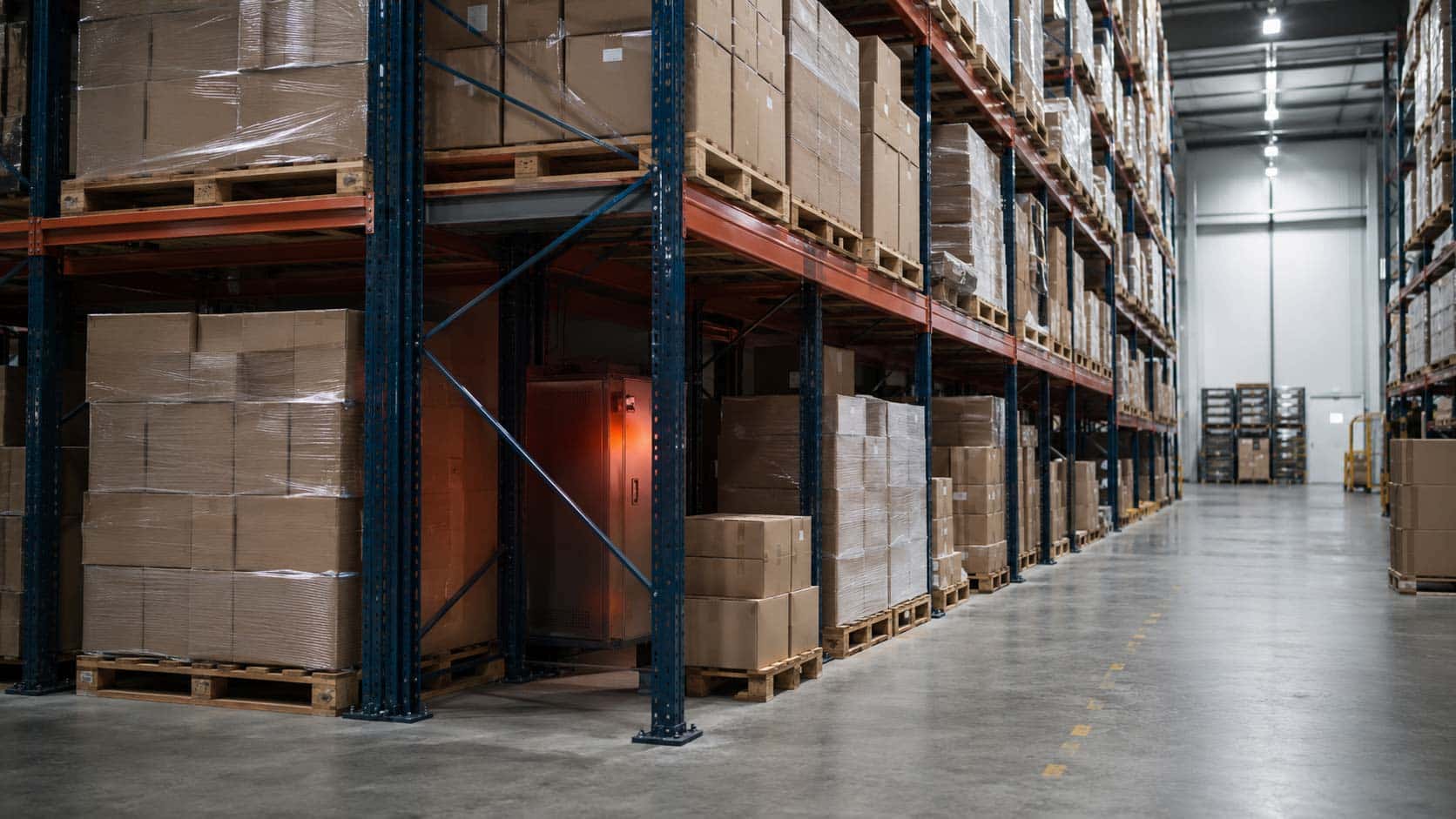
A fire in a warehouse does not necessarily remain confined to the point of ignition. Cardboard boxes, plastic film, plastic containers, and wooden pallets are often stored continuously throughout the space, making it easier for flames to spread to nearby materials. Narrow aisles between racks and tall storage loads can obstruct the view of the fire’s location. Once dense smoke accumulates, assessing conditions inside the facility or reaching the affected area may also become difficult.
Frequent changes in warehouse configuration also require attention. The types and quantities of stored goods may change, storage heights may increase, and new equipment may be installed between racks. The addition of automation equipment, charging systems, and control panels can introduce electrical hazards that did not exist when the building was completed. If these changes are not incorporated into the fire protection plan and inspection criteria, detectors and sprinklers may not perform as expected even when they are installed.
Warehouse fire prevention should begin by correcting site conditions rather than simply adding a particular product. Storage arrangements and ignition sources must be managed, while fire compartments and evacuation routes must remain unobstructed. Detectors, alarm systems, and sprinklers should also be checked to ensure that they can operate under their intended design conditions. A localized fire suppression device does not replace these fundamental systems. It is a supplementary measure for risks that existing protections may not adequately address.
This article examines why warehouse fires can escalate and identifies potential blind spots around storage racks. It also outlines confined spaces that may require separate attention even within the coverage of existing fire protection systems, along with the conditions that should be reviewed before applying an additional device.
1. Why Can a Small Fire Cause Extensive Damage in a Warehouse?
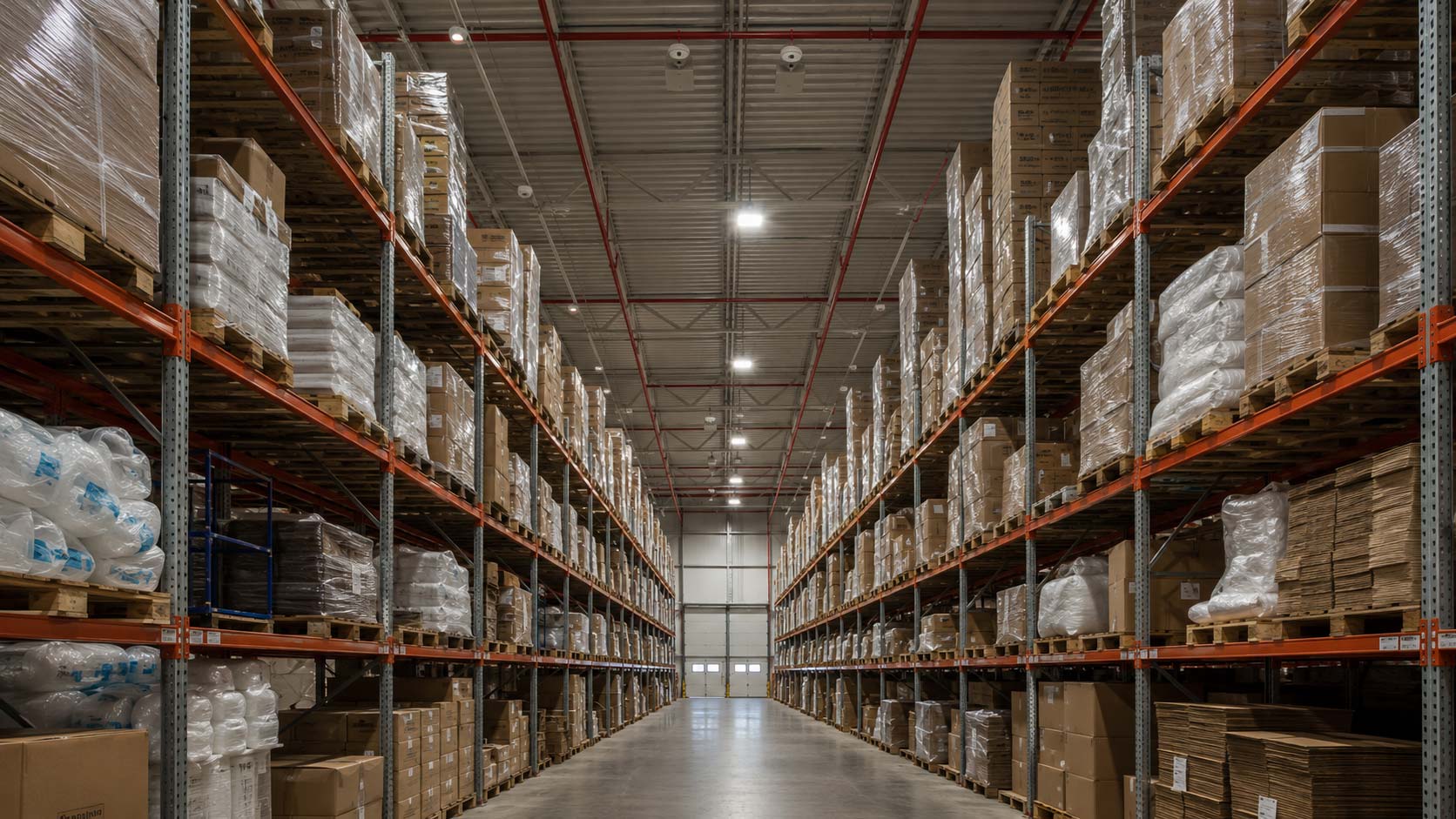
A warehouse may contain combustible materials throughout the facility, including cardboard boxes, plastic packaging, plastic containers, and wooden pallets. Storage contents and packaging conditions can vary even within the same building, so fire development cannot be explained by a single set of conditions. Changes in inventory also alter the fire load and combustion characteristics.
Racks improve space utilization, but they can complicate fire response. Tall storage loads may affect how heat and smoke reach detectors or interfere with sprinkler discharge. Goods or rack components that project beyond the rack may also obstruct the area around sprinkler heads. When a fire starts inside a rack, the point of ignition may not be immediately visible from the aisle. If stored goods collapse, they may also block access routes.
Early warning can be more difficult at night, when fewer employees are present. During staffed hours, someone may notice the smell of burning materials, visible smoke, or an unusual sound from equipment. During unmanned or minimally staffed periods, detection may be delayed. Automatic detection, alarms, initial sprinkler discharge, and notification to responsible personnel should therefore operate without interruption.
2. Ignition Sources Are Not Limited to Stored Goods
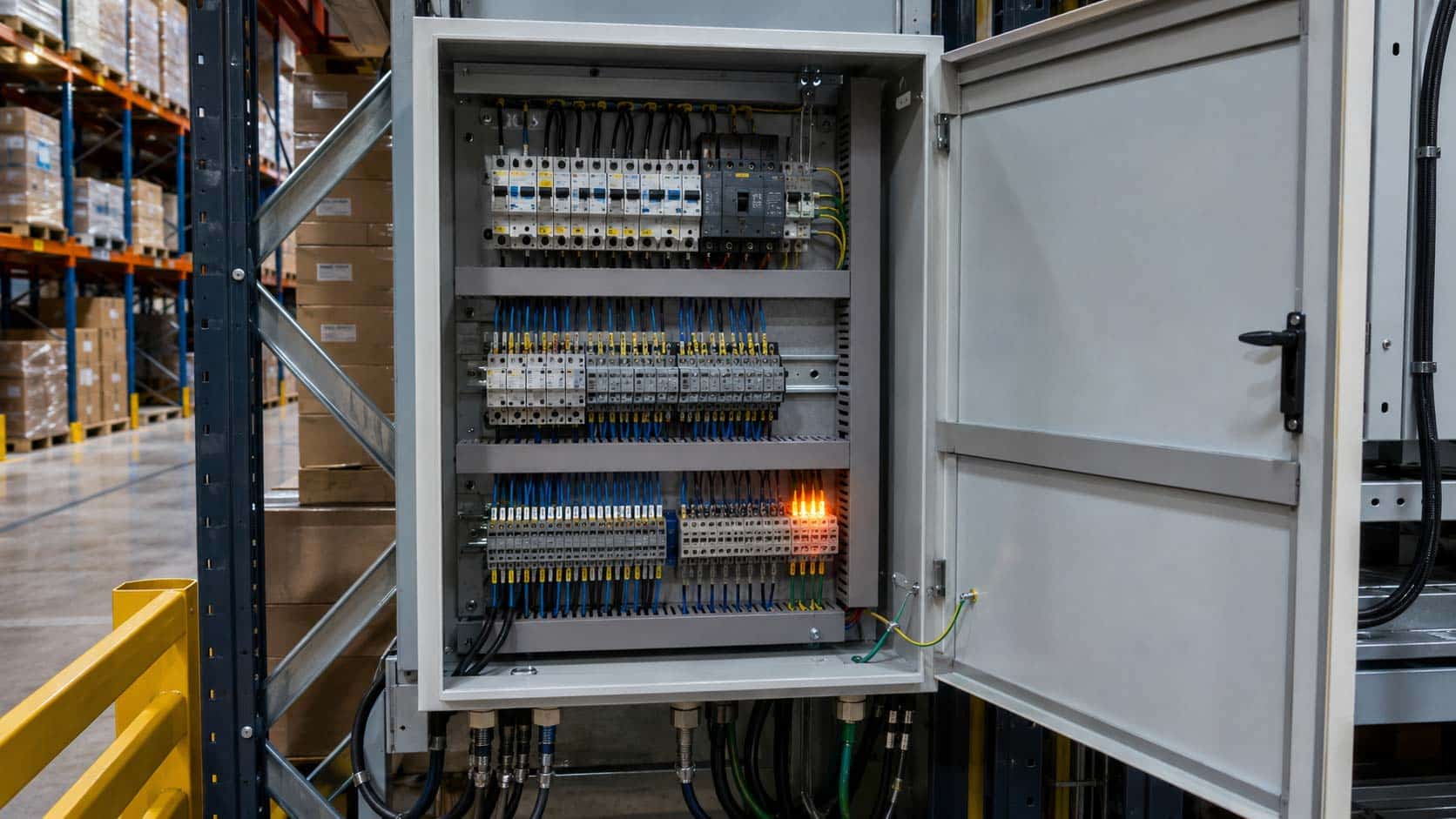
Equipment used in a warehouse may also become an ignition source. Distribution panels, switchboards, rack control panels, conveyor motors, power connections, charging equipment, and lighting wiring may be affected by short circuits, poor connections, overloads, insulation deterioration, or aging components.
Enclosed equipment, such as distribution panels and control cabinets, offers limited visibility into internal conditions. When installed behind storage racks or between automated machines, even opening the door for inspection may be difficult. Localized overheating inside the enclosure may remain undetected until smoke or flames become visible outside.
Not every electrical enclosure presents the same level of risk. Risk varies according to operating voltage and load, internal components, normal operating temperature, dust and moisture conditions, ventilation method, and inspection history. A practical approach is to prioritize equipment based on thermal-imaging inspection records, failure history, loose terminals, discoloration, and similar warning signs.
3. What Should Be Checked Before Installing a New Device?
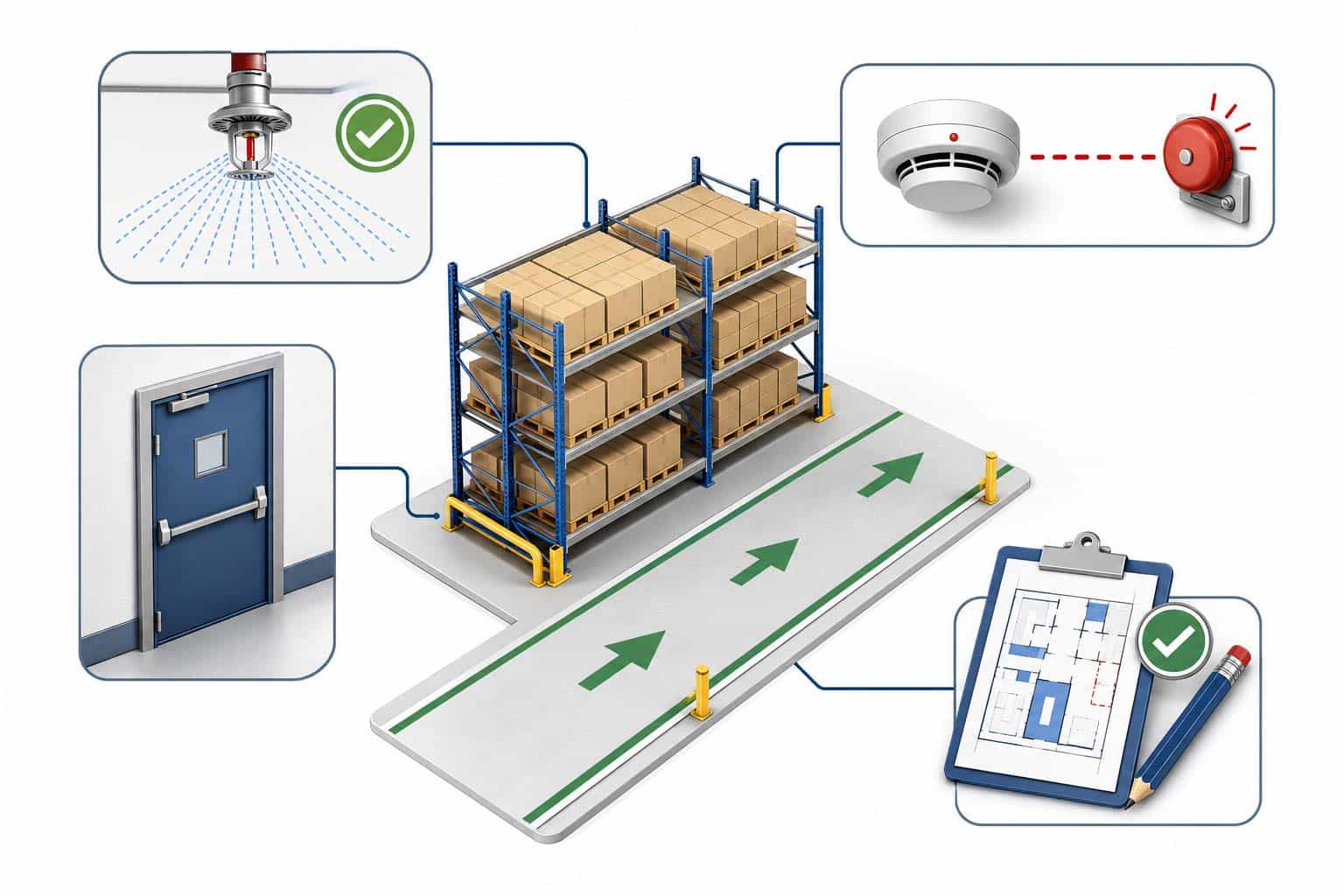
Warehouse facilities in South Korea are subject to the Fire Safety Performance Standards for Warehouse Facilities (NFPC 609). Sprinkler systems must also comply with the Fire Safety Performance Standards for Sprinkler Systems (NFPC 103) and the design conditions established for each site. If a hazard is identified around a storage rack, the current layout should first be checked against the approved fire protection design before another device is added.
Confirm that changes in storage height or rack layout have not created obstructions around sprinkler heads. Temporary storage, projecting boxes, banners, and ductwork can also interfere with sprinkler discharge patterns.
Fire compartments and fire doors should also be inspected to ensure that they continue to perform their intended functions. If fire doors are propped open for convenience or penetration through compartment barriers are not properly sealed, flames and smoke may spread into other areas.
Inventory and empty pallets should not be stored on evacuation routes or fire department access paths. They may appear to cause little disruption during normal operations but can obstruct evacuation and firefighting during a fire.
The process of notifying responsible personnel after a detector or alarm activates should also be tested under actual operating conditions. If night-shift employees or designated personnel do not receive the alarm promptly, the initial response may be delayed even when the equipment itself operates normally.
A procedure is also needed to document equipment additions and changes in storage arrangements and to share them with the fire safety manager. As minor changes accumulate, the difference between the original design and current operating conditions may become greater than expected.
4. Confined Spaces That Existing Systems May Not Reach Directly
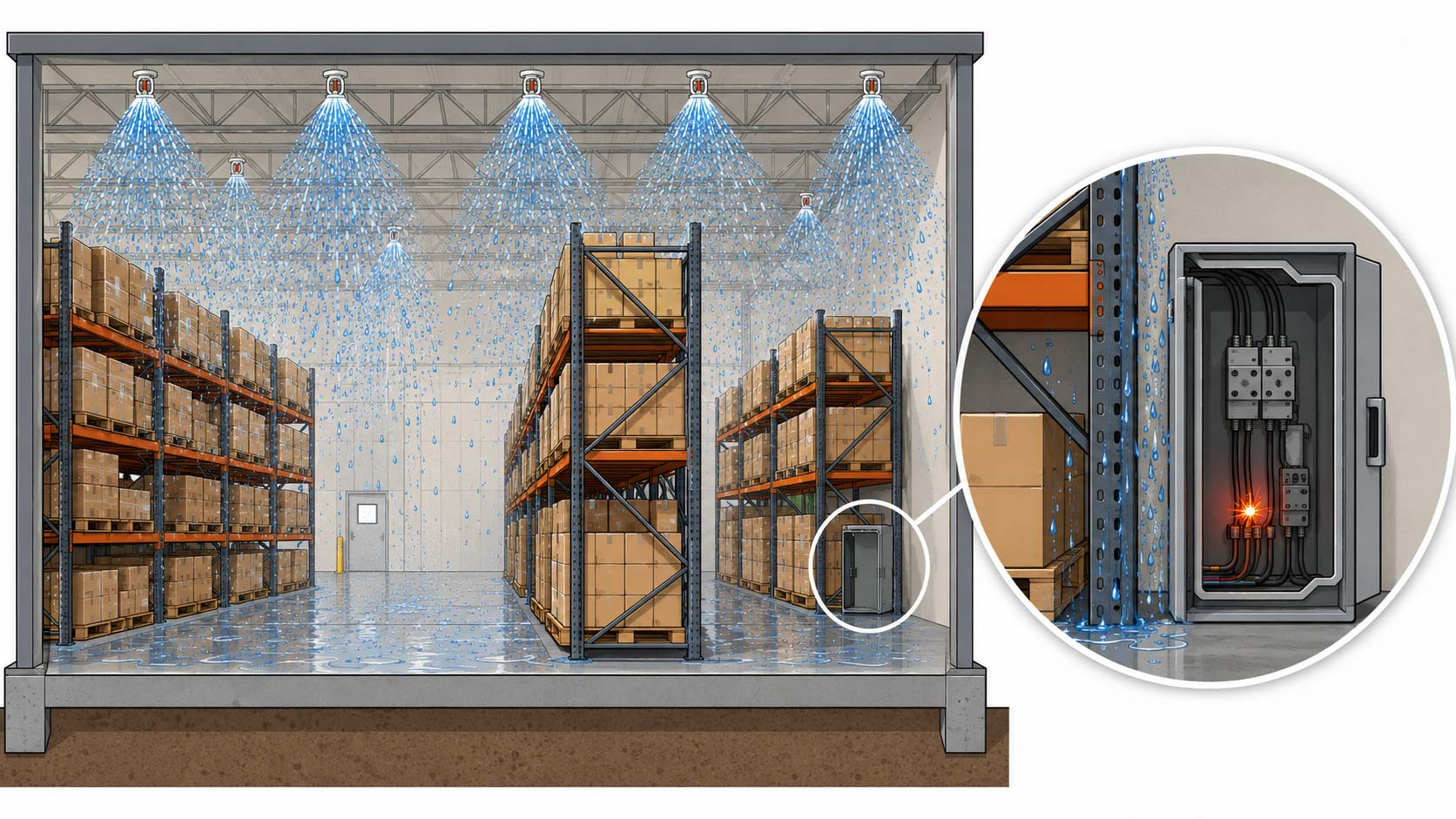
Even after the facility has been reviewed as a whole, residual risks may remain in small electrical panels and equipment enclosures concealed behind racks or machinery. The building may be protected by ceiling-mounted sprinklers, but when ignition occurs inside an enclosure, water may not reach the source immediately.
When identifying candidates for localized protection, the actual conditions of the space matter more than broad classifications such as “warehouse” or “storage rack.” The first step is to determine whether the expected ignition component and nearby combustible materials can be identified and whether the enclosure’s internal dimensions and effective volume can be measured. Door gaps, ventilation openings, cable entry points, and the condition of ventilation fans must also be assessed.
It is equally important to determine whether heat from a fire can reach the suppression device and whether the discharged agent can spread to the point of ignition. The device must not interfere with existing detectors, wiring, or inspection work, and its condition should remain accessible for regular inspection after installation.
Open rack aisles and an entire warehouse differ from small enclosures. Storage areas for textiles, construction materials, or large-capacity batteries also cannot simply be treated as confined spaces. Their degree of openness, anticipated fire size, and required quantity of extinguishing agent differ. There is insufficient basis for directly extending test results from a product designed for confined spaces to these larger applications.
5. When Can Automatic Fire Suppression for a Confined Space Be Considered?
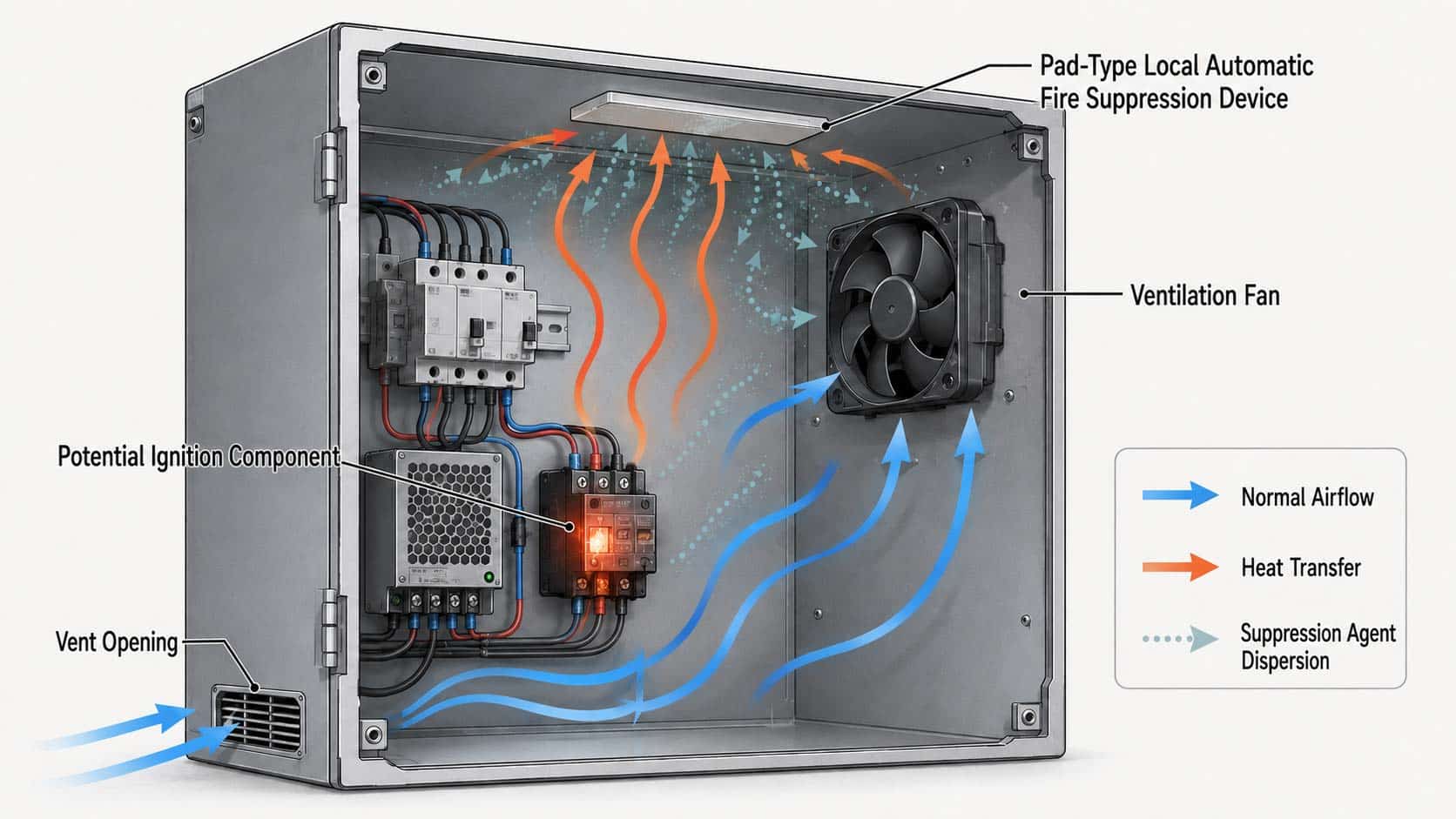
Reducing risk in a confined space begins with replacing aging components and correcting terminal connections and wiring conditions. If abnormal temperatures must be identified earlier, temperature monitoring or thermal-imaging inspections can be strengthened. If rapid notification is critical, detection, alarm, and communication systems may also be improved. An automatic suppression device should be selected only after the protected space, and expected fire characteristics have been assessed.
For a small enclosure where adding power wiring or agent piping is difficult, a thermally activated Fire Suppression Pad may be one option. The Insilico Fire Suppression Pad incorporates fire suppression microcapsules into a pad. It releases the extinguishing agent under defined thermal conditions and does not require a separate power source.
Installation conditions are critical in actual applications. The enclosure’s effective volume, openings, airflow, normal operating temperature, and expected ignition location must be identified. If a ventilation fan operates continuously or the enclosure door is opened frequently, the released agent may escape. Internal partitions and densely arranged components may also restrict the movement of heat or the extinguishing agent.
The Insilico Fire Suppression Pad obtained type approval from the Korea Fire Institute on September 10, 2025. Type approval is based on the approved product configuration and specified test conditions. It does not constitute a comprehensive guarantee of performance for every warehouse or installation method. The applicable fire type, protected volume, installation quantity, and orientation should be compared with actual site conditions based on the type approval certificate and product documentation.
6. Why Should Installation Conditions Be Documented?
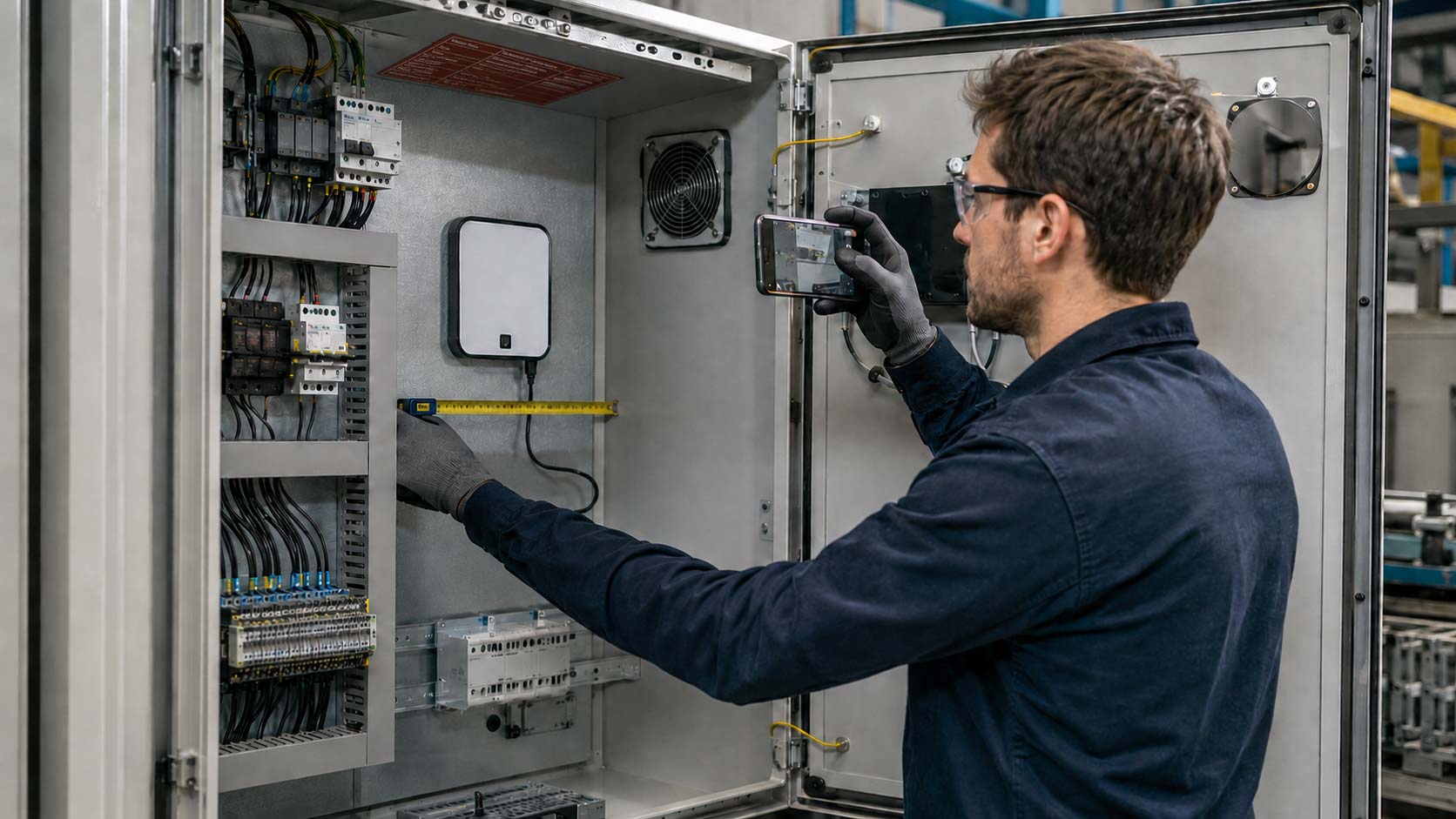
When a localized fire suppression device is installed, the environmental conditions at the time of installation should be documented. Recording the enclosure’s internal dimensions, photographs, installation position, product quantity and orientation, normal operating temperature, ventilation openings, and fan conditions makes it easier to assess how subsequent equipment changes may affect performance.
Conditions may change when internal components are replaced, partitions are added, or new ventilation openings and fans are installed to reduce heat. Even if the pad remains in the same position, these changes may alter how heat reaches it and how long the extinguishing agent remains inside the enclosure. The application conditions should therefore be reviewed again.
Periodic inspections should check the pad for damage, lifting, contamination, and signs of exposure to heat or moisture. Dust accumulation, loose terminals, damaged wiring, and abnormal heating inside the enclosure should be inspected at the same time. Installing a localized suppression device must not lead to less rigorous management of ignition sources.
Conclusion
(Video 1: Confined-space fire risks and localized protection measures in warehouses)
Warehouse fire protection cannot be addressed by managing only one potential cause. Different stored goods and packaging materials, tall racks, constantly changing inventory and equipment, and restricted access all interact. Once a fire starts, it may spread along the racks to nearby combustible materials, while smoke and collapsing goods can make evacuation and firefighting more difficult.
Managing storage conditions and access aisles and inspecting equipment that may become an ignition source should come first. Fire compartments, detectors, alarms, and sprinklers must be maintained so that they function under their design conditions. Changes at the site should also be incorporated into fire safety management.
If hard-to-reach electrical panels or equipment enclosures still present residual risks after these measures have been implemented, they may be classified as separate protection targets. In small enclosures where installing power wiring and agent piping is difficult, localized automatic fire suppression—including a thermally activated Fire Suppression Pad—may be considered. Applicability should be determined based on internal volume, openings, ventilation conditions, normal operating temperature, ignition sources, installation position, and the scope of approval.
Rather than attempting to protect an entire warehouse with a single product, a more practical approach is to manage open areas through existing fire protection systems and identify smaller spaces those systems may not reach directly. A Fire Suppression Pad is one possible supplementary measure within this approach. Safe application requires a detailed understanding of site conditions before a product is selected.
Frequently Asked Questions (Q&A)
Q: Where can the Fire Suppression Pad be installed?
A: The Fire Suppression Pad is designed for small, enclosed spaces such as distribution panels, switchboards, control cabinets, and equipment enclosures. Suitability depends on the enclosure’s size, internal layout, ignition sources, operating temperature, openings, and ventilation conditions.
Q: Can it be installed in any small enclosure?
A: The enclosure’s dimensions are only one part of the assessment. Effective internal volume, openings, ventilation fans, partitions, normal operating temperature, expected ignition location, and type approval conditions should also be reviewed.
Q: How does the pad work with existing fire protection systems?
A: The Fire Suppression Pad provides localized protection within an enclosure and complements existing sprinklers, detectors, and alarm systems. It can be considered for electrical panels and equipment enclosures that ceiling-mounted sprinklers may not reach directly.
Q: What does KFI type approval mean?
A: The Insilico Fire Suppression Pad received type approval from the Korea Fire Institute on September 10, 2025. The approval confirms performance under the approved product configuration and specified test conditions. Each installation should follow the approved fire type, protected volume, quantity, orientation, and other conditions stated in the relevant documentation.
Q: What information should be provided for an application review?
A: Useful information includes photographs of the enclosure’s interior and exterior, internal dimensions, ventilation openings, fan operation, normal operating temperature, major components, and expected ignition points. These details support a more accurate application assessment.
If risks remain in distribution panels, switchboards, control cabinets, or hard-to-reach equipment enclosures around storage racks after the warehouse fire protection system has been reviewed, a confined-space localized protection approach may be considered.
Insilico Co., Ltd. evaluates the potential application of its Fire Suppression Pad based on enclosure volume, openings, normal operating temperature, expected ignition sources, and type approval conditions. Providing site photographs, internal dimensions, and ventilation conditions can support a more specific consultation.
References
- National Fire Protection Association — Fire Protection of Modern Warehouses
- Fire Protection Research Foundation — Identifying Challenges to Fire Service Response in Storage Facilities
- UL Solutions — New Challenges in Fire Safety in ASRS Warehouses
- Insilico Co., Ltd. — Fire Extinguishing Capsule and Fire Suppression Pad